
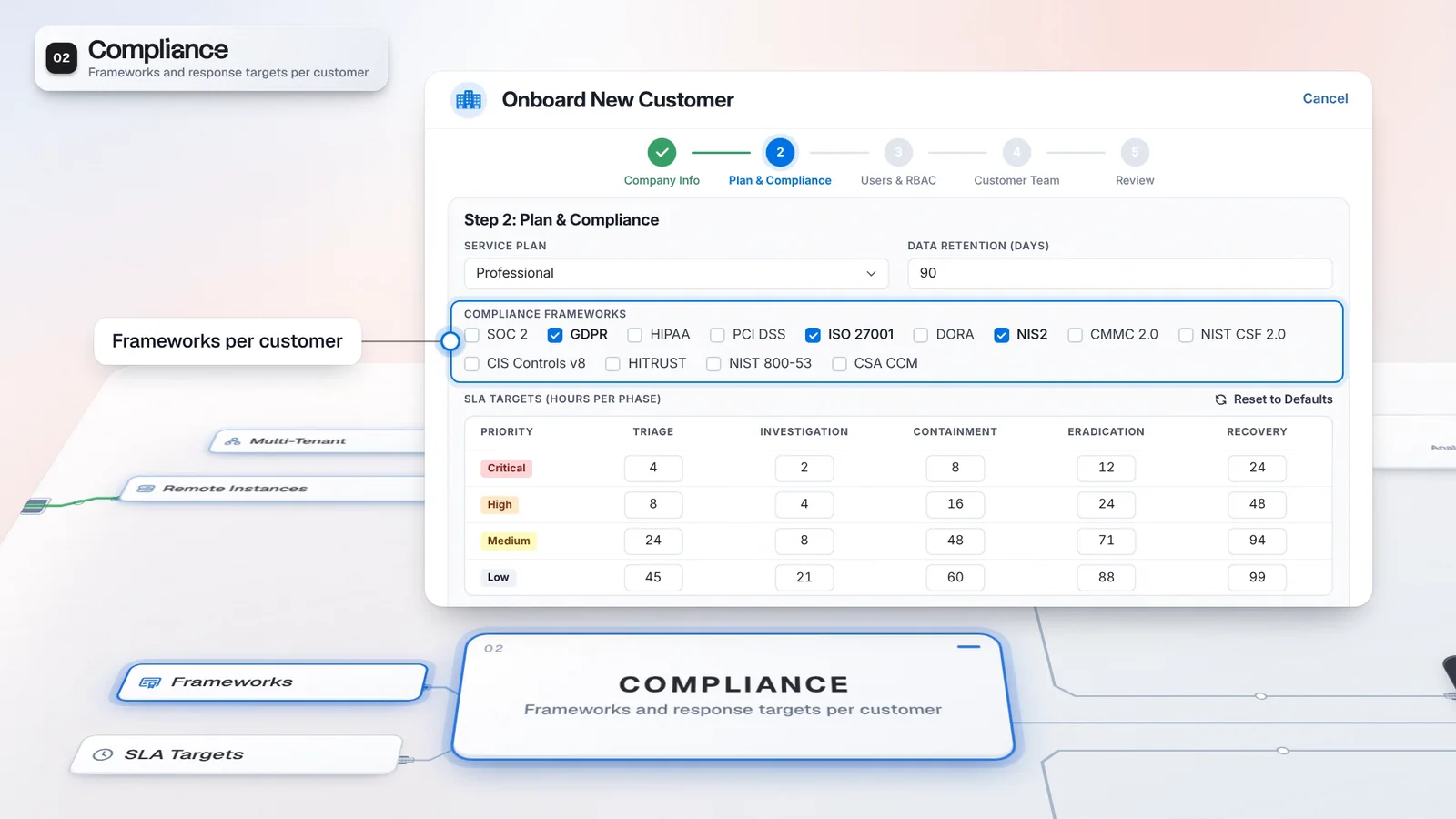
 Start with onboarding



Amsterdam, November 16, 2026. Imperum, the Autonomous SOC Platform for the Full Attack Lifecycle, today announced that it has joined NVIDIA Inception, a program designed to help startups build faster and grow their businesses.
Imperum is built for enterprise SOCs, MSSPs and MDR providers. Its AI agents triage, investigate and prioritize alerts across the security tools a team already runs, and response runs under the customer's approvals. The platform runs on-premises, in the cloud, hybrid or fully air-gapped, and its AI can run entirely inside the customer's environment.
Imperum already hosts the language models its platform needs on NVIDIA DGX Spark. Its free Imperum Cybersecurity LLM, released under Apache 2.0, generates approximately 50 tokens per second for a single stream on one NVIDIA DGX Spark. Security teams can run it locally, including in air-gapped environments, without sending prompts or security data to an external model provider.
As an Inception member, Imperum gains access to NVIDIA technical resources, preferred pricing on NVIDIA hardware and software, and opportunities to connect with investors. Imperum plans to evaluate NVIDIA NIM microservices and NVIDIA TensorRT-LLM or Triton Inference Server for its triage and investigation models, and NVIDIA DGX Spark and DGX Station as hardware for on-premises and air-gapped deployments.
“Security teams in banks, government and critical infrastructure often cannot send their alerts to a cloud model. They need AI that runs where their data already is. Joining NVIDIA Inception helps us make that local AI faster and easier to deploy, from our own Cybersecurity LLM to the agents that investigate alerts for analysts.”
About Imperum
Imperum is an Autonomous SOC Platform for the Full Attack Lifecycle. Built for enterprise SOCs, MSSPs, and MDR providers, Imperum helps security teams prepare before attacks, respond during incidents, and improve after every case through coordinated AI agents, detection optimization, forensics, automation, and human-controlled response.