


Where it runs and where your data goes
Every AI SOC sends alerts, evidence and analyst context to a model. Know which model, where it runs, and who can change it.
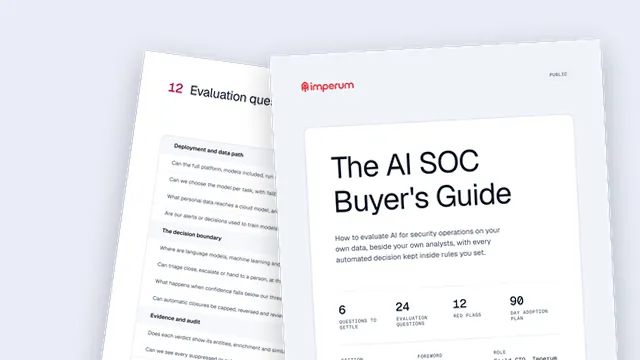
How to evaluate AI for security operations on your own data, beside your own analysts, with every automated decision kept inside rules you set.
Written for CISOs and SOC leaders evaluating AI SOC platforms. The questions apply to every vendor on a shortlist, Imperum included.
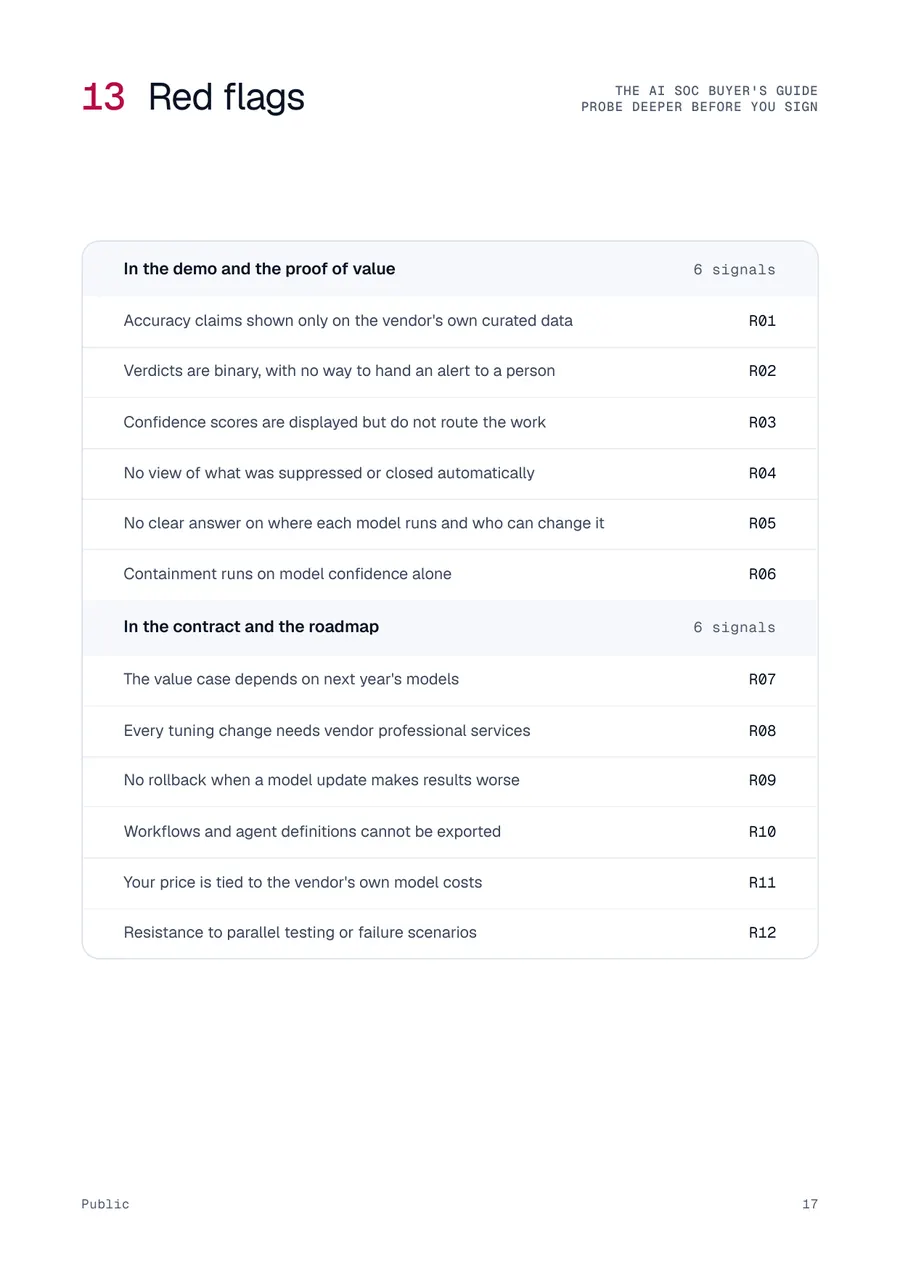
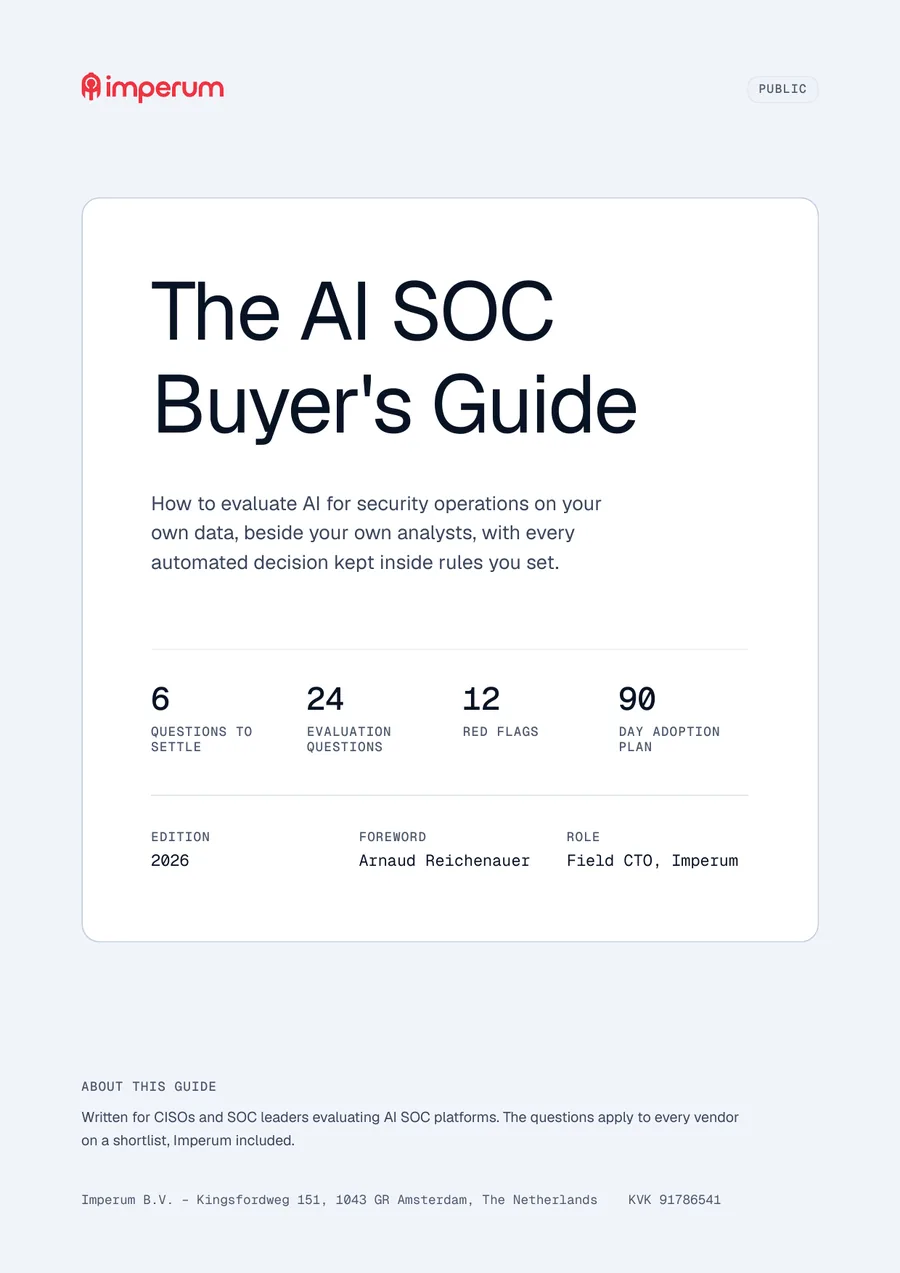
The guide is built around six questions to settle before you sign, a proof of value that tests failure as well as success, a 90-day adoption plan and a checklist to take into the room.
Each chapter gives the questions to ask a vendor and what to verify in the answers.
Every AI SOC sends alerts, evidence and analyst context to a model. Know which model, where it runs, and who can change it.
Probabilistic reasoning belongs in triage and investigation. Containment and access changes belong to rules you can audit.
A verdict without evidence is a liability. Analysts need to see why, and auditors need to reconstruct it afterward.
Autonomy should be a dial you set per workflow, backed by an approval queue and an audit trail, not a single switch.
A platform that does not learn from your analysts repeats its mistakes. One that calls a large model for every alert pays for it.
Most organizations keep their SIEM and EDR. The platform should work across them, extend to what is missing, and let you leave with your work.
The last section shows how Imperum answers the same questions, so you can hold us to them.

A demo shows what a platform does on a good day with curated data. Your decision rests on what it does on your data, when context is missing and the model is wrong.
Arnaud ran tactical SOCs for national and international military operations at the French Ministry for Armed Forces, then SOC Services for 50+ clients in the Middle East.
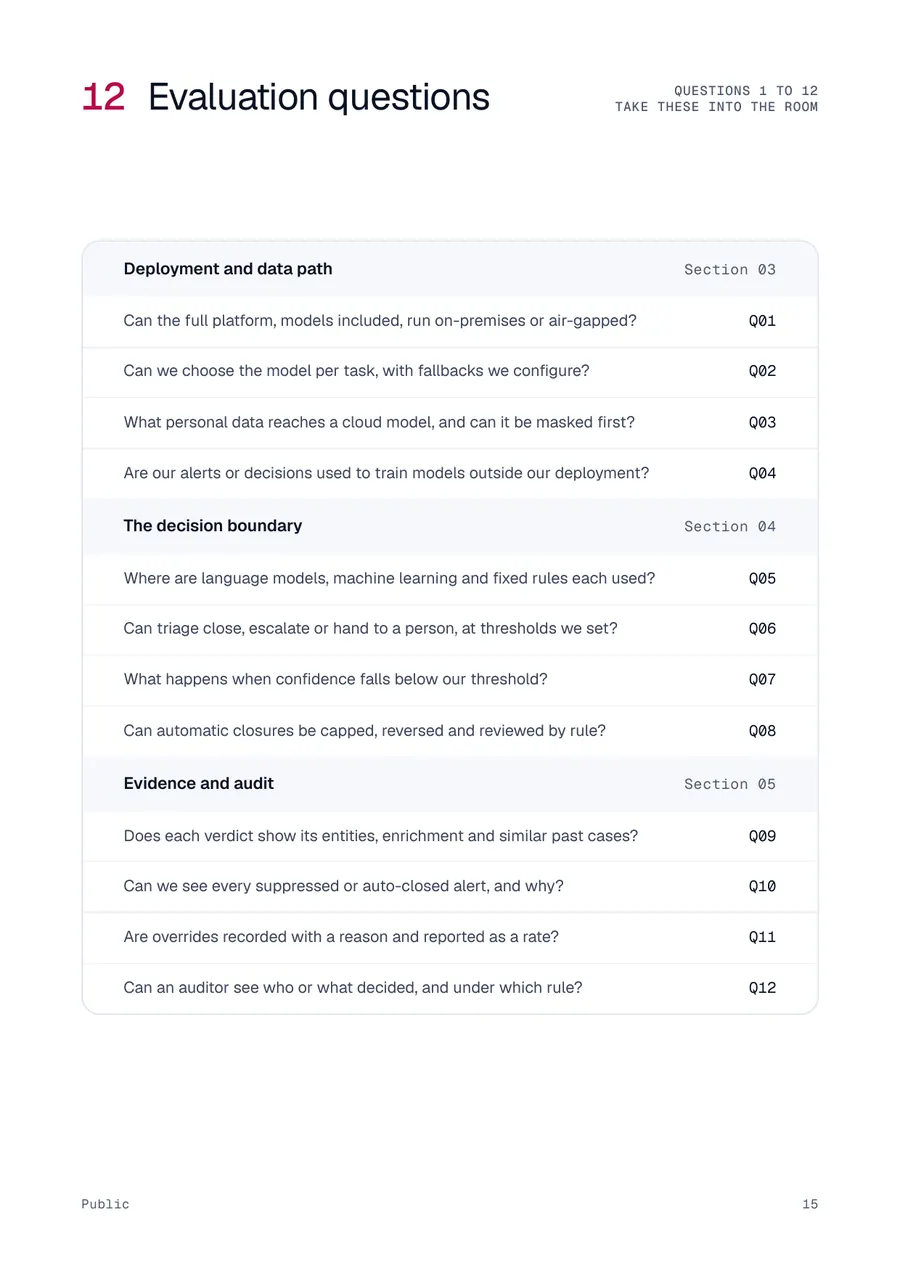
24 evaluation questions and 12 red flags to put to every vendor on your shortlist, Imperum included.